
Omega-3 Fatty Acids: Benefits, Best Sources, Dosage, and Why Your Body Needs Them
Omega-3 fatty acids are among the most researched nutrients in the world—and for good reason.
These essential fats play a vital role in heart health, brain function, mood support, inflammation control, and even healthy skin.
Yet most people still don’t get enough of them in their daily diet.
This article breaks down everything you need to know about omega-3 in a simple, clear, and science-based way.
Whether you want to support your heart, boost your brain, or improve overall wellness, understanding omega-3 can make a major difference.
What Are Omega-3 Fatty Acids?
Omega-3s are essential fatty acids, meaning your body needs them but cannot produce them on its own—you must get them from food or supplements.
There are three main types of omega-3:
1-EPA (Eicosapentaenoic acid) – Supports heart health and reduces inflammation.
2-DHA (Docosahexaenoic acid) – Critical for brain health, memory, mood, and eye function.
3-ALA (Alpha-linolenic acid) – Plant-based omega-3 found in seeds, nuts, and oils; the body converts only a small amount into EPA and DHA.
For optimal health, EPA and DHA—the marine forms—are the most important.
Health Benefits of Omega-3
1. Supports Heart Health
Omega-3 is one of the strongest natural protectors of the heart. Research shows it can:
Lower triglycerides
Reduce inflammation in arteries
Improve blood flow
Support healthy blood pressure
Lower the risk of plaque buildup
This makes omega-3 essential for long-term cardiovascular health.
2. Boosts Brain Function and Memory
Nearly 30% of the brain is made of DHA. Adequate omega-3 is linked to:
Improved focus
Better memory
Reduced risk of age-related cognitive decline
Support for brain development during pregnancy
Low omega-3 levels are also associated with poor concentration and slower learning.
3. Enhances Mood and Reduces Anxiety
Omega-3—especially EPA—helps regulate neurotransmitters like serotonin and dopamine. This can:
Improve mood
Reduce symptoms of depression
Lower stress and anxiety
Support emotional balance
It is commonly used as a natural support alongside standard mental health treatments.
4. Reduces inflammation in the body
Chronic inflammation contributes to many conditions, including:
Joint pain
Autoimmune diseases
Heart disease
Skin conditions
Omega-3 has anti-inflammatory effects that help calm the immune system and support overall wellness.
5. Supports Skin Health
DHA helps maintain the structure of skin cells, while EPA helps control oil production and hydration. Benefits include:
Fewer breakouts
Reduced redness and irritation
Smoother, more nourished skin
Protection from UV-related damage
Omega-3 is especially helpful for people with eczema and dry skin.
6. Improves Eye Health
DHA is a major structural component of the retina. Getting enough omega-3 may:
Reduce dry eye symptoms
Support vision
Decrease risk of age-related eye degeneration
7. Essential During Pregnancy and Breastfeeding
Omega-3 is crucial for fetal and infant development. It supports:
Brain growth
Eye development
Healthy nervous system
Full-term pregnancy
Pregnant women are often advised to increase DHA intake.
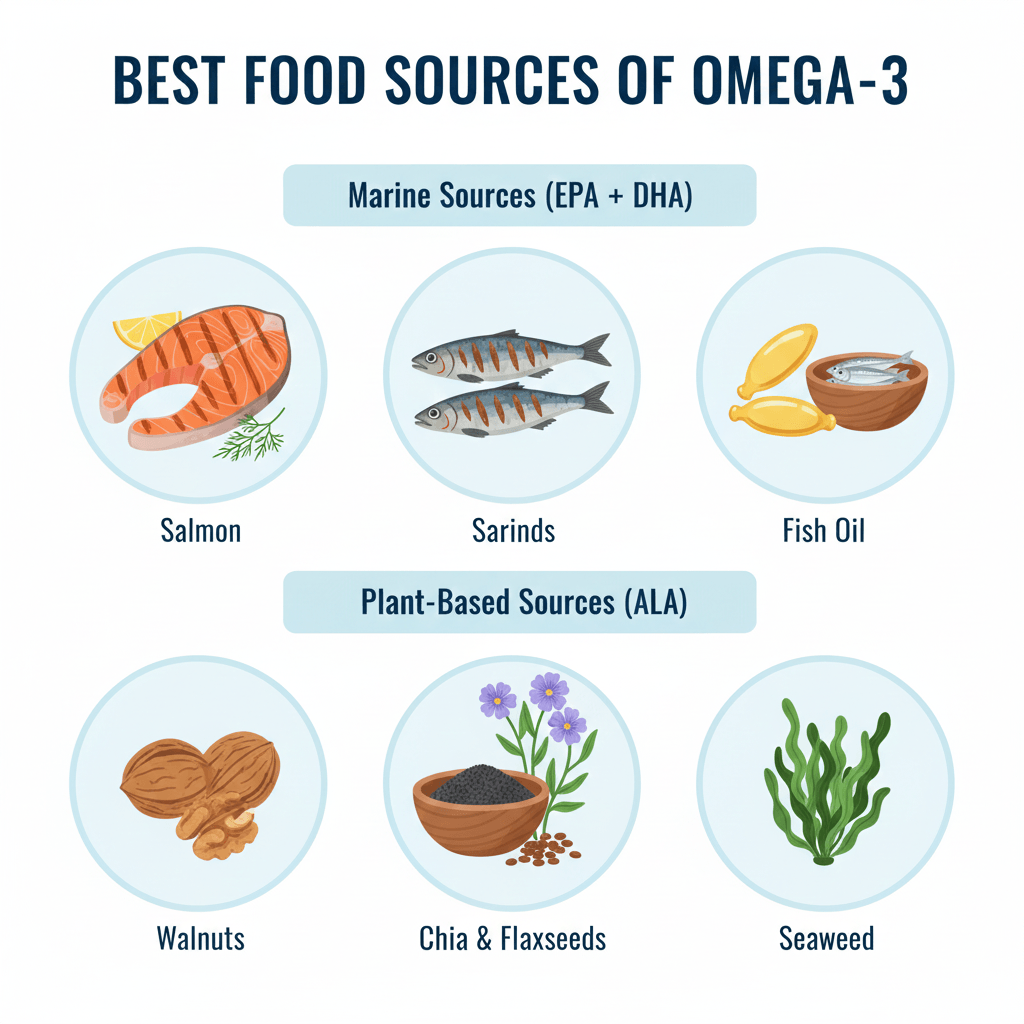
Best Food Sources of Omega-3
High EPA & DHA Sources (Best Absorption)
Salmon
Sardines
Mackerel
Anchovies
Tuna (in moderation due to mercury)
Herring
Cod liver oil
Plant-Based ALA Sources (Less Effective but Still Beneficial)
Chia seeds
Flaxseeds
Walnuts
Hemp seeds
Seaweed and algae
Soybeans
For vegetarians and vegans, algae oil is the best source of DHA and EPA.
How Much Omega-3 Do You Need?
Most health organizations recommend:
500–1,000 mg of EPA + DHA daily for general health
1,000–2,000 mg daily for heart or inflammation support
200–300 mg DHA daily during pregnancy
Always check supplement labels for EPA and DHA amounts—not just “fish oil.”
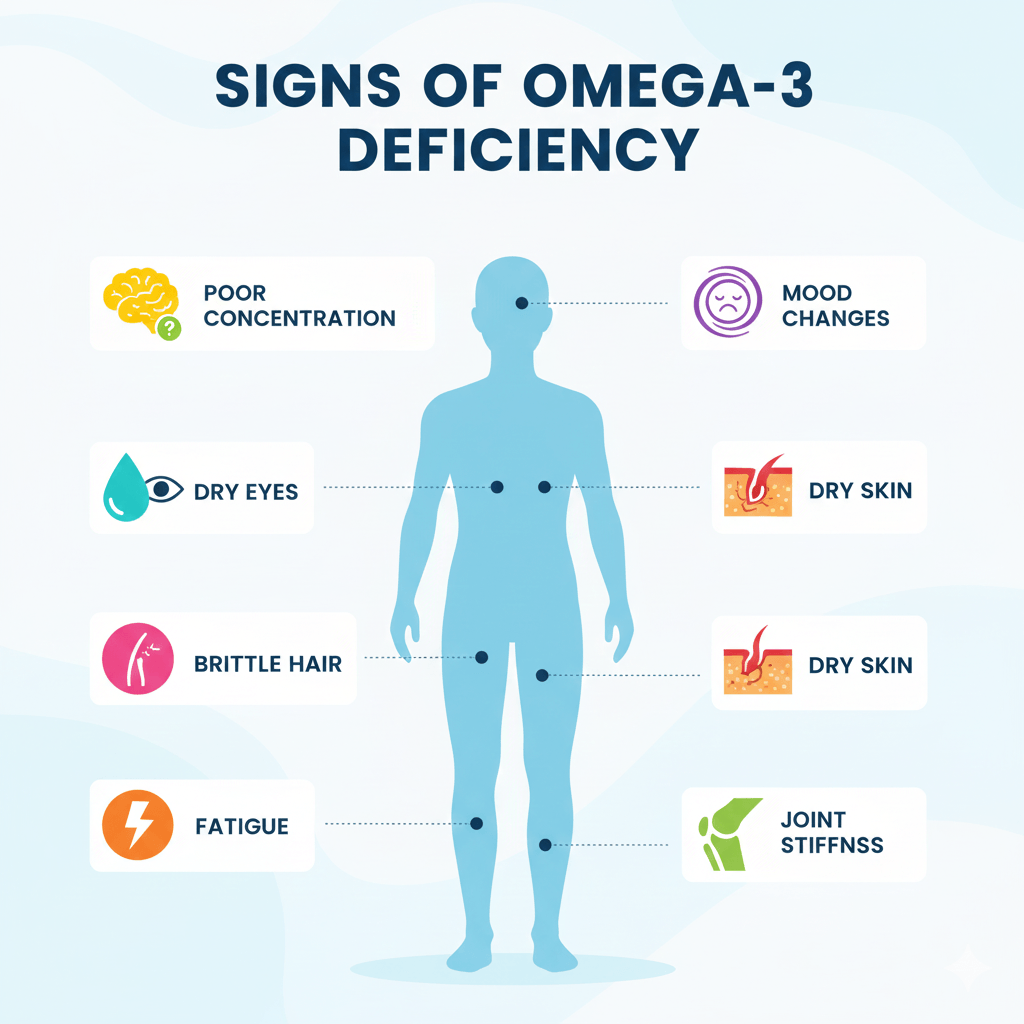
Signs You May Be Deficient in Omega-3
Dry skin
Poor memory
Fatigue
Increased inflammation
Joint pain
Mood swings or low mood
Brittle hair and nails
Vision problems
Many people have deficiency without realizing it, especially those who rarely eat fish.
Omega-3 Supplements: What to Choose
1. Fish Oil
Most common and cost-effective. High in EPA and DHA.
2. Krill Oil
Smaller dose needed and easier to absorb.
3. Algae Oil
Best option for vegans and pregnant women.
4. Cod Liver Oil
Provides omega-3 plus vitamins A and D.
When choosing a supplement:
Look for purity-tested products
Choose triglyceride or re-esterified form for better absorption
Check for EPA:DHA ratio depending on your goals
Are There Side Effects?
Omega-3 is generally very safe, but high doses may cause:
Mild stomach upset
Fishy aftertaste
Loose stools
People taking blood thinners should speak with a healthcare provider before using higher doses.
Omega-3 and Weight Loss
Omega-3 does not cause weight loss directly, but it can help by:
Reducing inflammation
Balancing blood sugar
Improving metabolism
Supporting appetite control
Combined with a healthy diet, it contributes to healthier weight management.
Omega-3 for Skin and Hair
Omega-3 supports:
Hydrated skin
Stronger hair follicles
Reduced dandruff
Slower aging signs
It’s one of the best nutrients for natural beauty care.
Conclusion
Omega-3 fatty acids are essential for heart health, brain function, mood, eyes, skin, and overall wellness.
Since the body cannot make them, regular intake through food or supplements is essential.
Whether you prefer fatty fish, seeds, or algae oil, adding omega-3 to your daily routine is one of the easiest ways to support a healthier life.
Taking even small steps—like eating fish twice a week or adding a high-quality supplement—can lead to long-term benefits you’ll truly feel.