Magnesium: The Miracle Mineral Your Body Can’t Live Without
Introduction
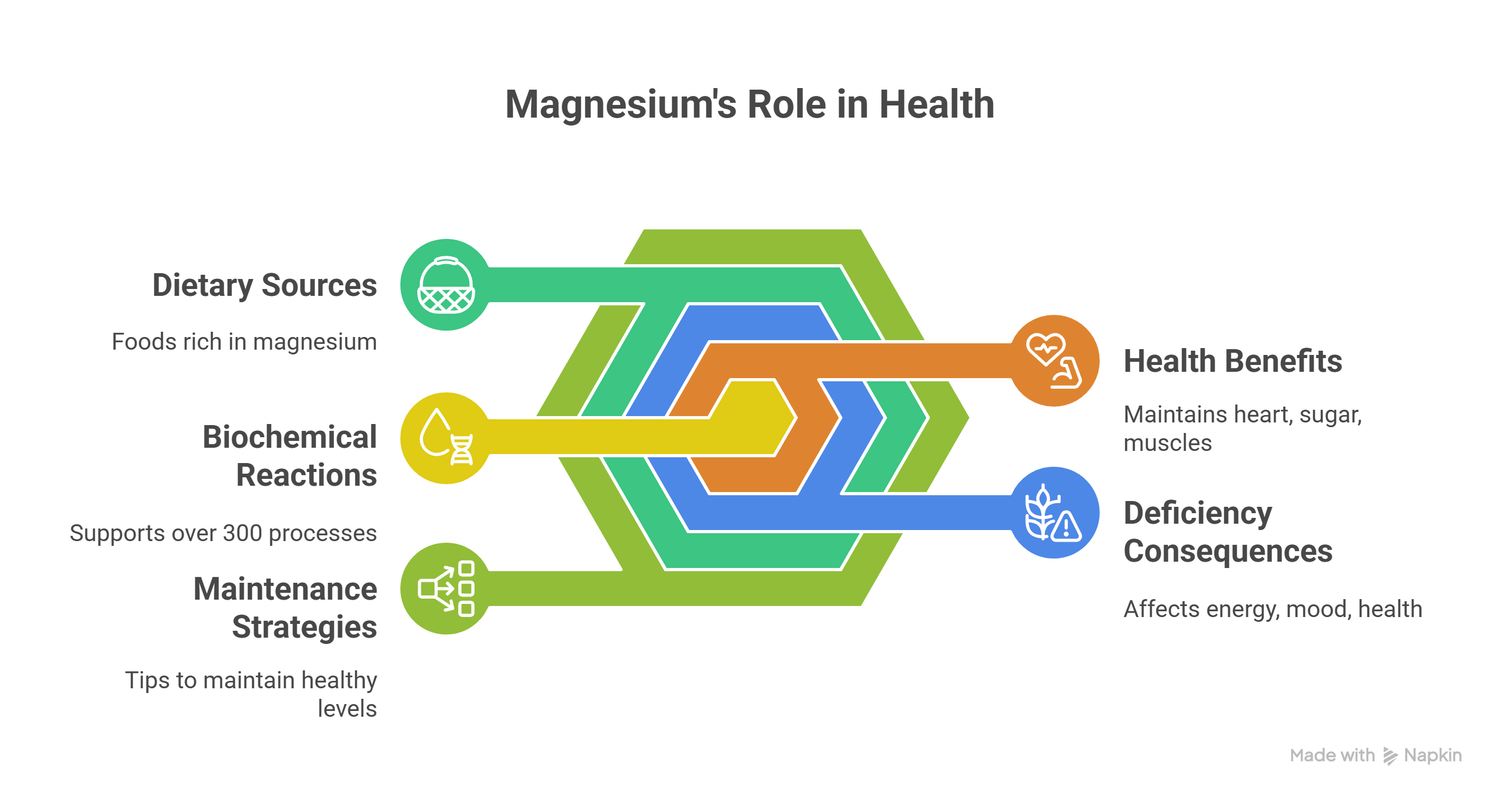
When it comes to essential minerals, magnesium often doesn’t get as much attention as calcium or iron. Yet, it quietly supports more than 300 biochemical reactions in your body — from maintaining heart rhythm and balancing blood sugar to keeping your muscles, nerves, and bones strong.
Sadly, many people don’t get enough magnesium from their diets, leading to hidden deficiencies that affect energy, mood, and overall health. In this article, we’ll explore what magnesium does, why it matters, signs of deficiency, food sources, and how to maintain healthy levels — explained simply, with accurate medical science.
What Is Magnesium and Why Is It Essential?
Magnesium is a mineral found both inside and outside your cells. It acts like a “helper molecule,” activating enzymes and making countless body processes work smoothly.
Here are its most important roles:
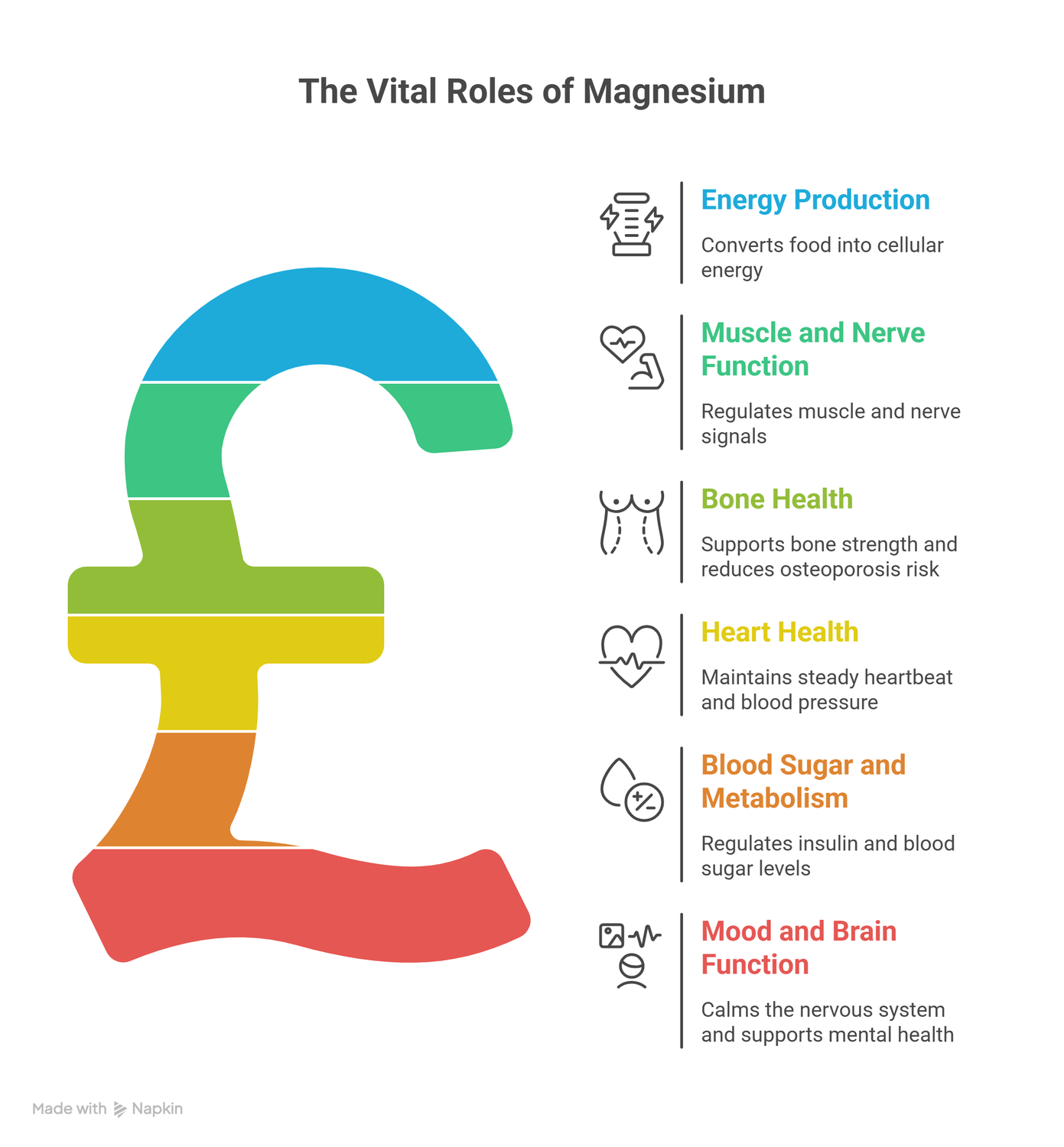
Energy Production
Magnesium helps convert the food you eat into ATP (the energy currency of your cells).
Without it, you’d feel constantly tired and sluggish.
Muscle and Nerve Function
It allows your muscles to contract and relax properly.
It also regulates nerve signals, preventing spasms, cramps, and twitches.
Bone Health
About 60% of magnesium in your body is stored in bones.
It works with calcium and vitamin D to keep bones strong and reduce osteoporosis risk.
Heart Health
Magnesium keeps your heartbeat steady and supports normal blood pressure.
Low magnesium levels are linked to arrhythmias (irregular heartbeat).
Blood Sugar and Metabolism
Magnesium helps regulate insulin and blood sugar.
Deficiency is linked to insulin resistance and type 2 diabetes.
Mood and Brain Function
It calms the nervous system by regulating neurotransmitters.
Research shows low magnesium may contribute to anxiety, depression, and migraines.
How Much Magnesium Do You Need?
According to the National Institutes of Health (NIH):
Adult men: 400–420 mg/day
Adult women: 310–320 mg/day
Pregnant women: 350–360 mg/day
Despite these recommendations, many adults consume less than the daily requirement, especially those with processed diets.
Signs and Symptoms of Magnesium Deficiency
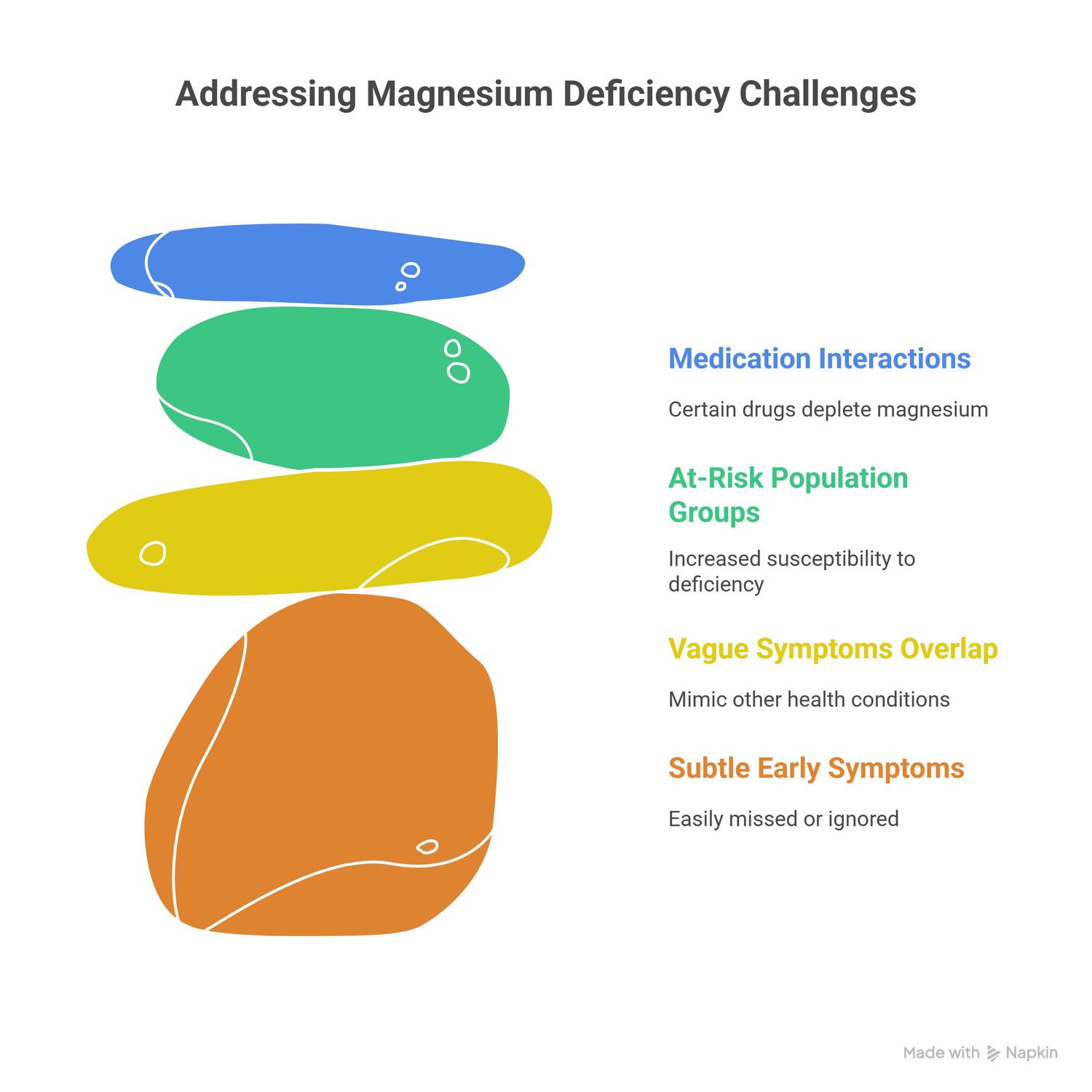
Magnesium deficiency, also called hypomagnesemia, is often overlooked. Early signs are subtle but can progress if untreated.
Mild Deficiency Symptoms:
Muscle cramps and twitches
Fatigue and weakness
Poor sleep
Headaches or migraines
Anxiety or irritability
Moderate to Severe Deficiency Symptoms:
Numbness and tingling
Irregular heartbeat
High blood pressure
Seizures (rare, but possible)
Certain groups are more at risk: older adults, people with digestive disorders (like Crohn’s disease), heavy alcohol use, or those taking certain medications (like diuretics, proton pump inhibitors, or antibiotics
The Best Food Sources of Magnesium
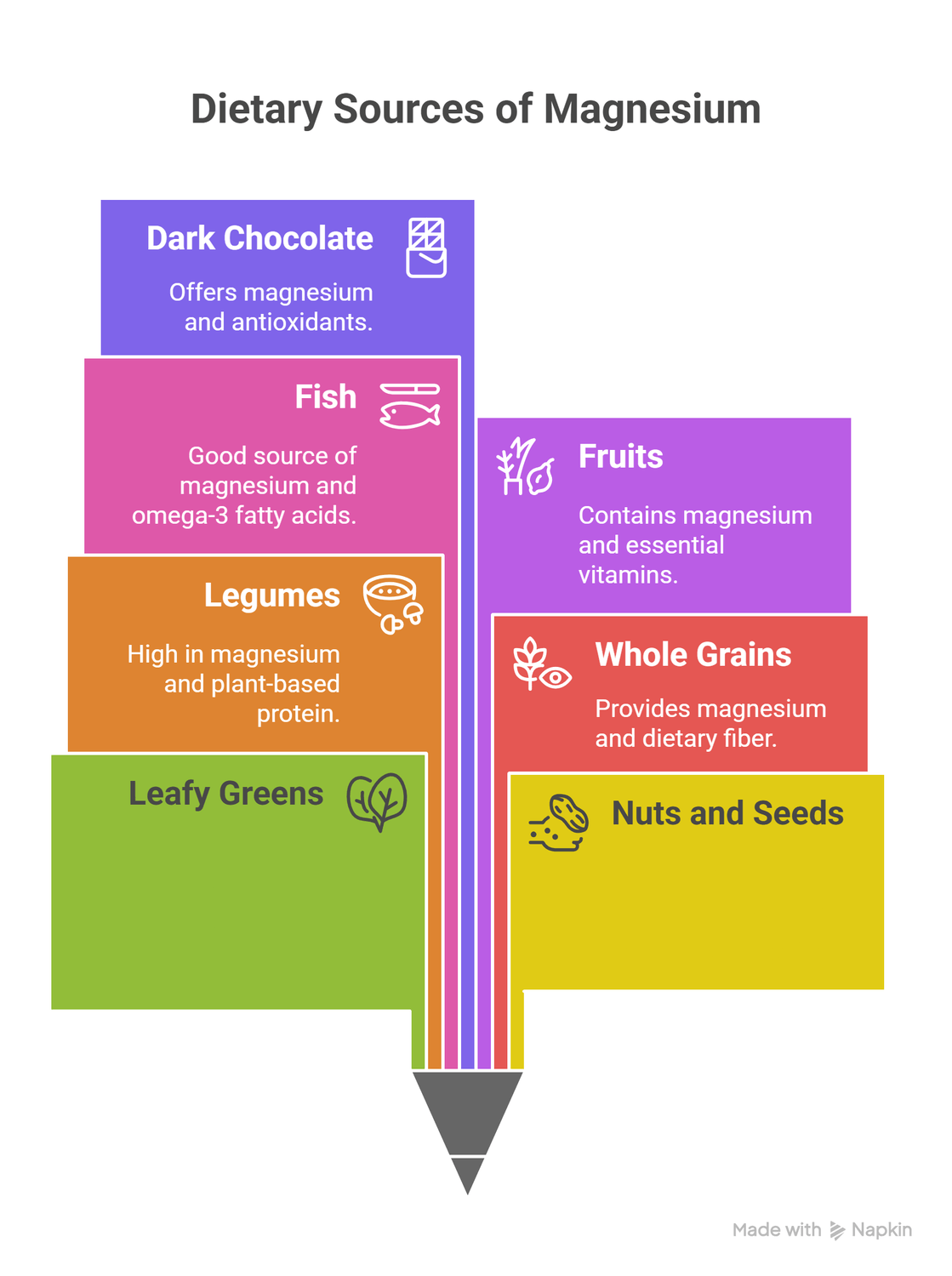
Fortunately, magnesium is abundant in many natural foods. Adding these to your diet can help prevent deficiency:
Leafy greens: spinach, kale, Swiss chard
Nuts and seeds: almonds, cashews, pumpkin seeds, sunflower seeds
Legumes: black beans, lentils, chickpeas
Whole grains: brown rice, oats, quinoa
Fish: mackerel, salmon, halibut
Fruits: bananas, avocados, figs
Dark chocolate (70% or higher)
💡 Tip: Magnesium from food is more easily absorbed than from supplements. Pairing magnesium-rich foods with a balanced diet increases effectiveness.
Magnesium and Common Health Conditions
Magnesium isn’t just about preventing cramps — it plays a role in many chronic conditions:
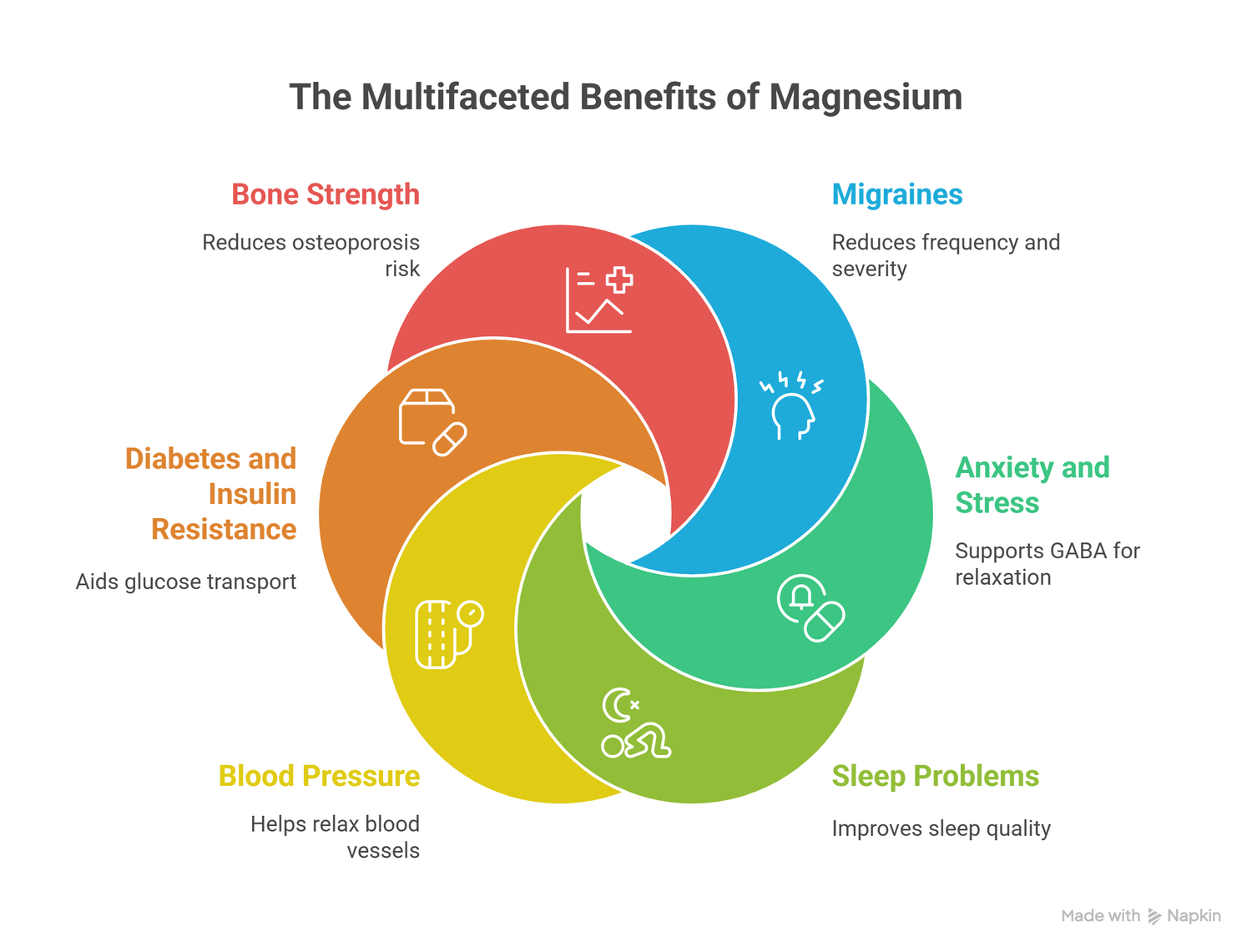
Migraines
Studies show magnesium may reduce the frequency and severity of migraines.
Anxiety and Stress
Magnesium supports GABA, a calming neurotransmitter, helping reduce stress and promote relaxation.
Sleep Problems
Magnesium relaxes muscles and the nervous system, improving sleep quality.
Blood Pressure
Adequate magnesium helps relax blood vessels, lowering high blood pressure.
Diabetes and Insulin Resistance
Magnesium helps insulin transport glucose into cells. Low levels can worsen blood sugar control.
Bone Strength
Combined with vitamin D and calcium, magnesium reduces osteoporosis risk
Magnesium Supplements: When and How
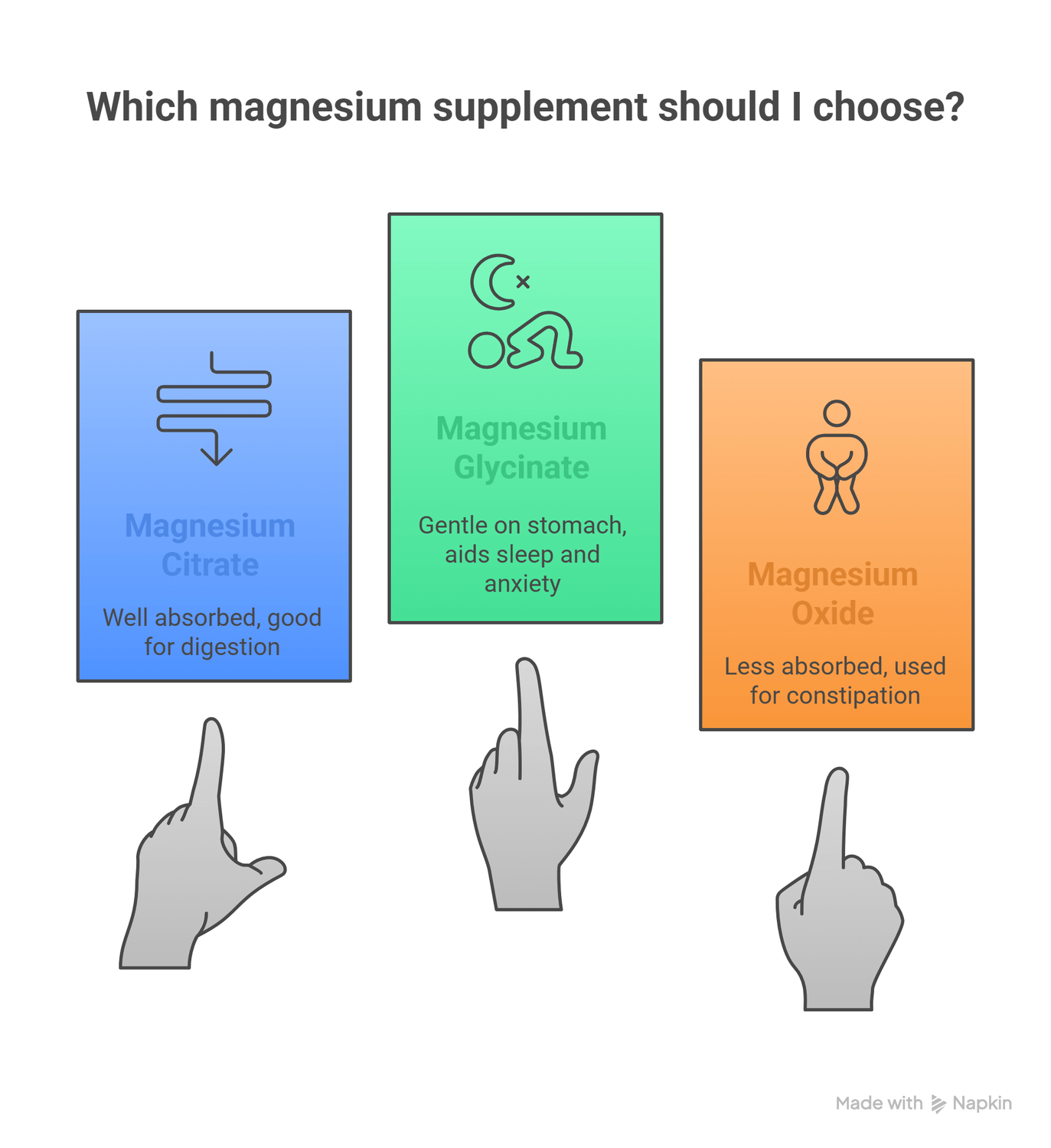
Sometimes food isn’t enough, and supplements may be needed. These come in different forms:
Magnesium citrate: Well absorbed, often used for digestion.
Magnesium glycinate: Gentle on the stomach, good for sleep and anxiety.
Magnesium oxide: Less absorbed but often used for constipation.
⚠️ Important: Too much magnesium from supplements can cause diarrhea, nausea, and in severe cases, heart problems. Always consult a healthcare professional before starting supplements.
How to Maintain Healthy Magnesium Levels
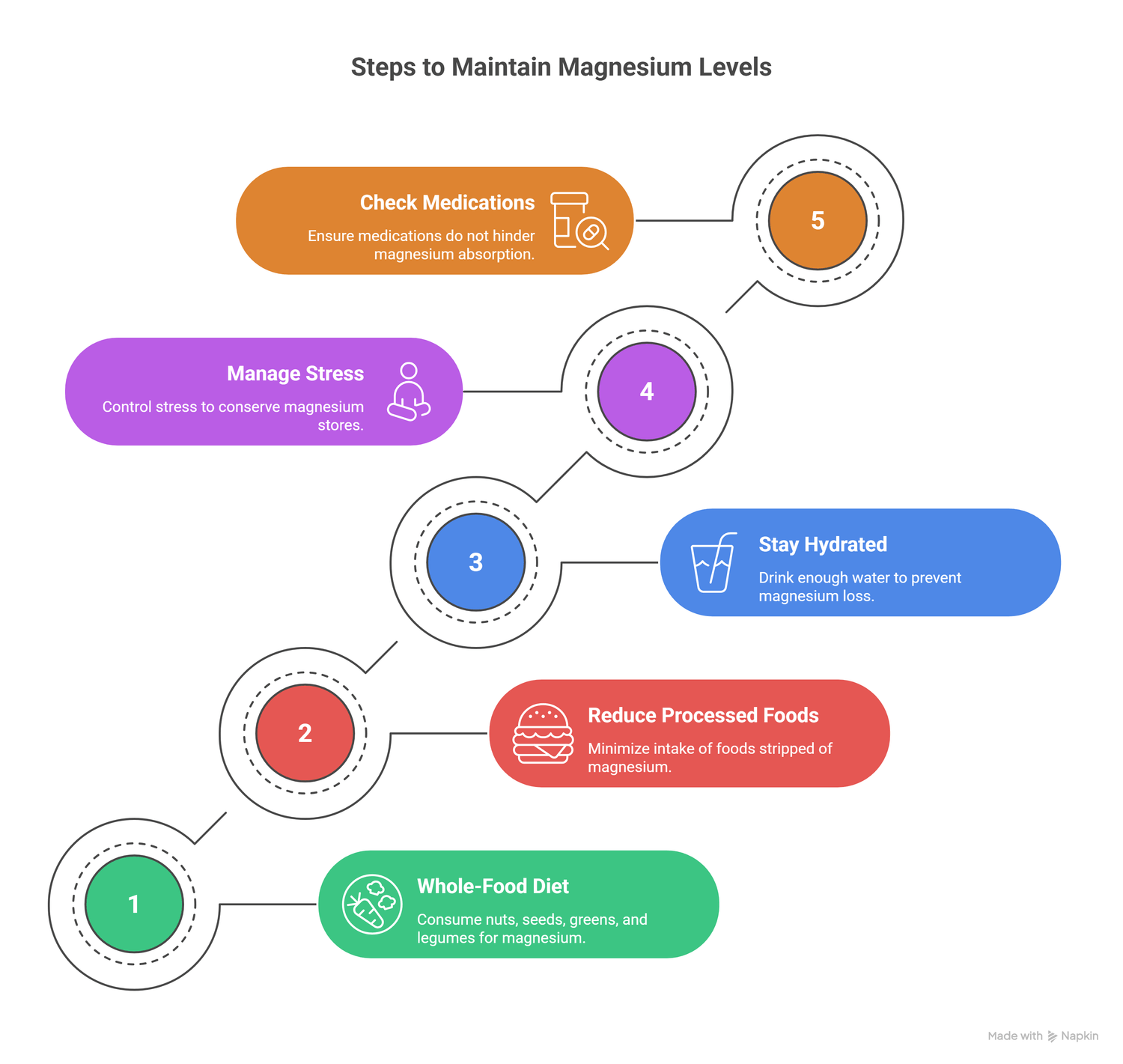
Eat a whole-food diet rich in nuts, seeds, greens, and legumes.
Reduce processed foods, which are often stripped of magnesium.
Stay hydrated, as dehydration increases magnesium loss.
Manage stress, since stress hormones use up magnesium stores.
Check medications, as some may reduce magnesium absorption.
Conclusion
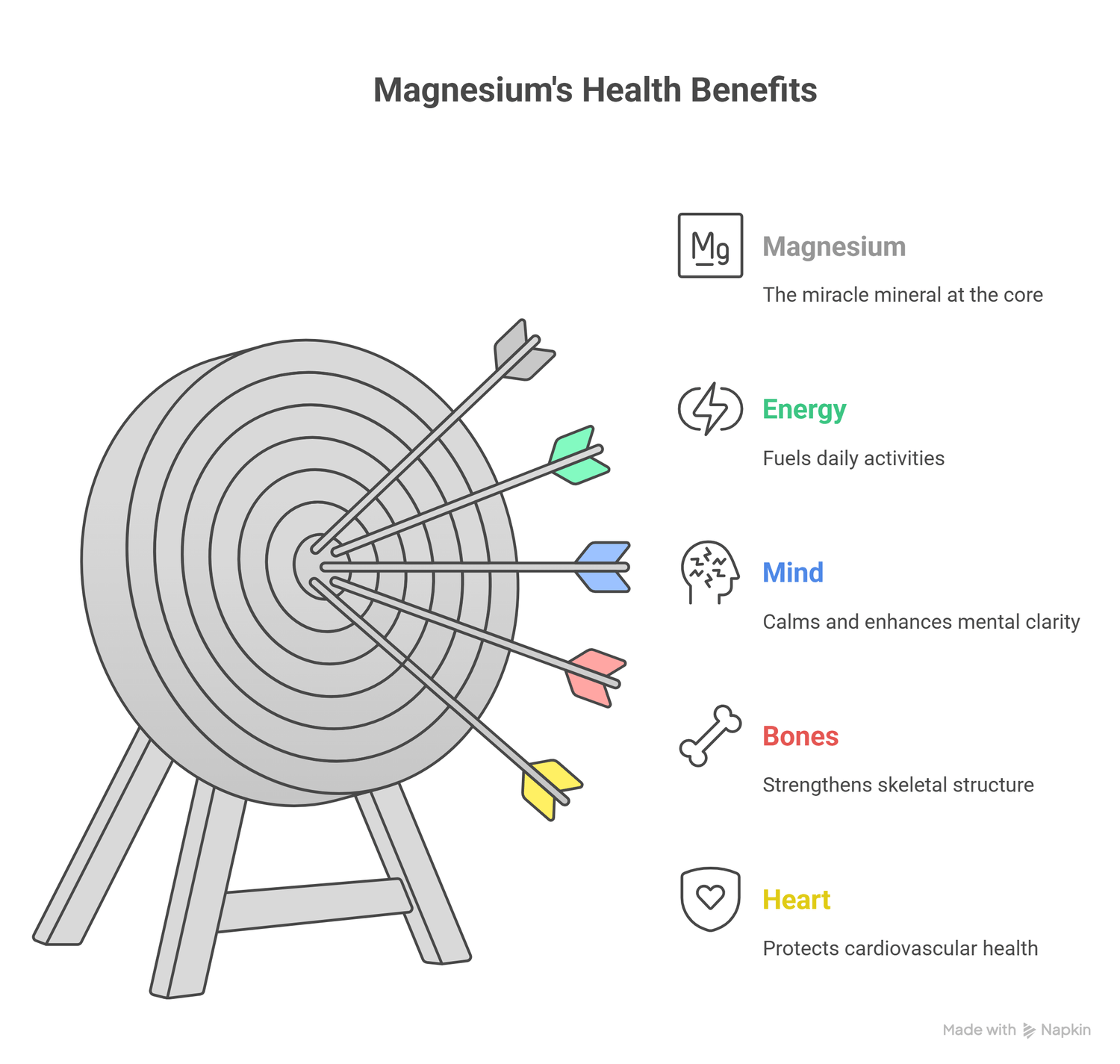
Magnesium truly is a miracle mineral — fueling your energy, calming your mind, strengthening your bones, and protecting your heart. Yet, it’s one of the most under-consumed nutrients worldwide.
By focusing on magnesium-rich foods and being mindful of deficiency signs, you can protect your health naturally. And if you need extra support, magnesium supplements (under medical guidance) can help restore balance.
Remember: small daily choices — a handful of nuts, a serving of greens, a square of dark chocolate — can make a big difference for your body and mind.